What makes appeal work different.
General practice-management tools assume a project that starts, runs, and ends. An appeal isn't that shape.
The clock is the case
Every level restarts a deadline, and a missed one can end the matter regardless of how strong it was. Tracking dates isn't administrative overhead here — it's the work.
The record only grows
The denial letter, the plan's rationale, the clinical notes, the corrected claim, the letter you wrote last level. By the third round nobody remembers which version was submitted where.
You are the continuity
Your client won't remember what was filed in March, and the plan's representative changes between calls. The only durable memory of the case is the one you keep.
How Advolutely holds an appeal together.
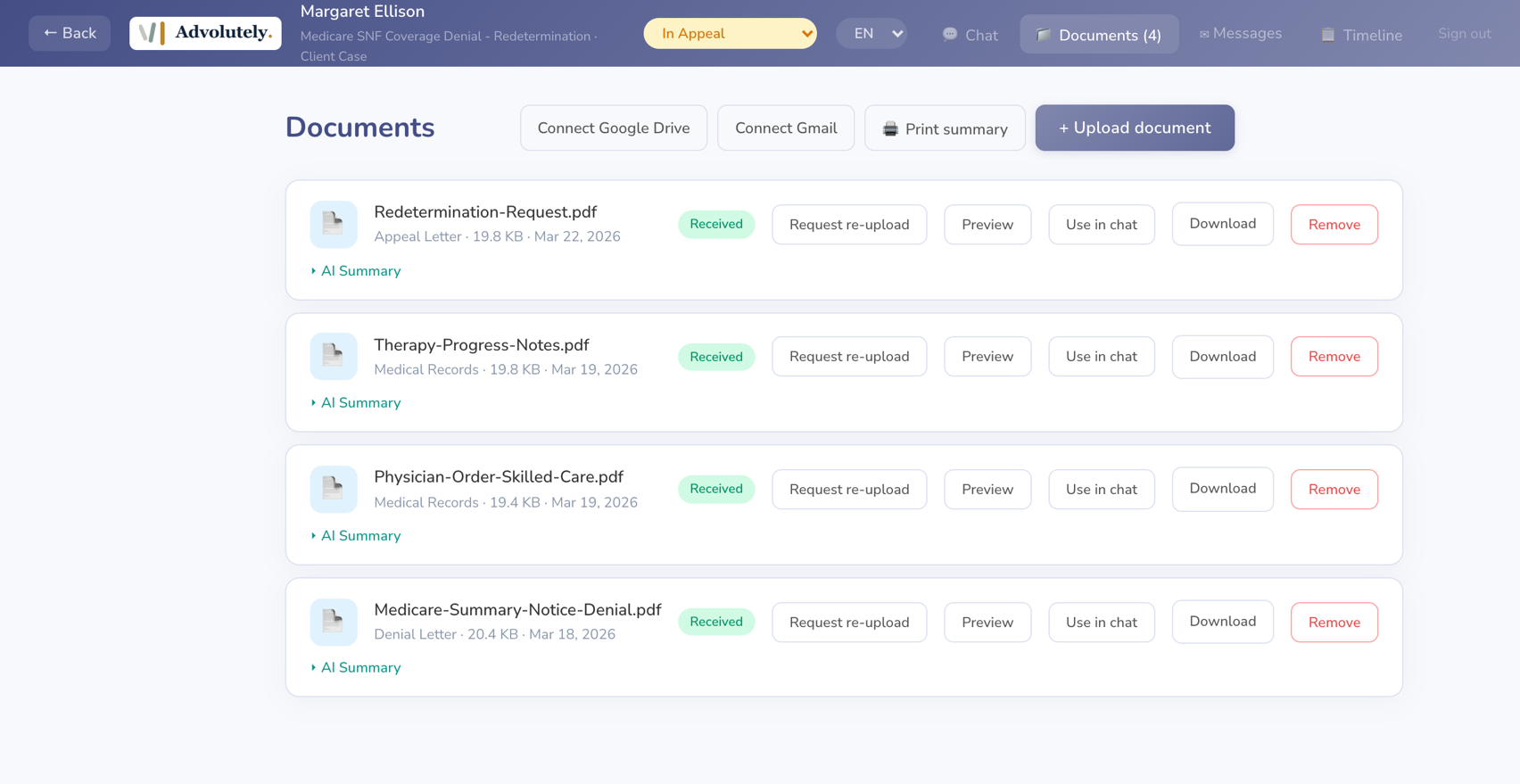
One case file that survives escalation
A denial that moves up a level is the same case, not a new one. Documents, notes, and history stay attached as it climbs, so the record you hand to the next reviewer is the record you actually built.
Records that arrive where they belong
Your client uploads through a portal with a single access code — no account to create, no password to lose. What they send lands filed against the case instead of buried in an inbox thread.
An assistant that's read the denial letter
Ask what reason the plan gave, or which dates of service are in dispute, and get an answer drawn from the documents on the case — not a general-purpose chatbot guessing at your file.
A status that answers "where are we?"
Your client can see the case has moved to appeal without phoning to ask. You get the hour back, and they get the reassurance — which is usually what the call was really about.
What it isn't
- Not legal advice, and not a substitute for counsel when a matter needs one.
- It doesn't file anything on your behalf or talk to a plan for you. You run the appeal; this keeps the case straight while you do.
- It doesn't predict outcomes. Nothing here makes a weak appeal strong.
Run appeals for a living?
Advolutely is in private beta, shaped by the advocates using it. If this is your work, we'd like it shaped by you too.
Request beta access